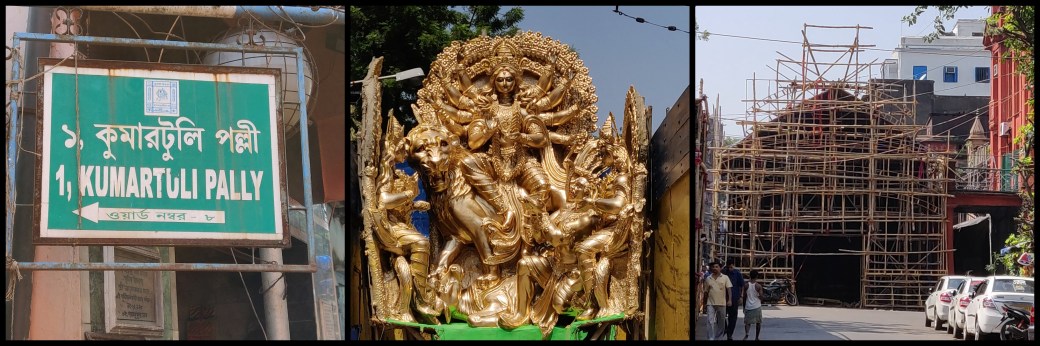
The city of Kolkata was getting dressed with lights, bamboo pandal structures, hoardings, happy faces and all the other ingredients of festivity. And amidst this fervor of preparations to welcome Ma Durga, I was packing my bags to leave Kolkata. This feeling was somewhat like getting a ticket for the show, entering the theater, seeing the stage, and then having to come out before the show began. So what do I do, I plan to visit the green room itself.
The green room of Bengal’s biggest religious show is called Kumortuli. In Bangla, Kumor is the person who gives shape to clay and Tuli is where people live as a small community. In the by lanes of north Kolkata there live the Kumors, the skillful artisans of Bengal and the place is known as Kumortuli. Long before the shiuli blooms or the kash turns marshy lands into golden yellow the Kumors of Kumortuli start kneading clay.
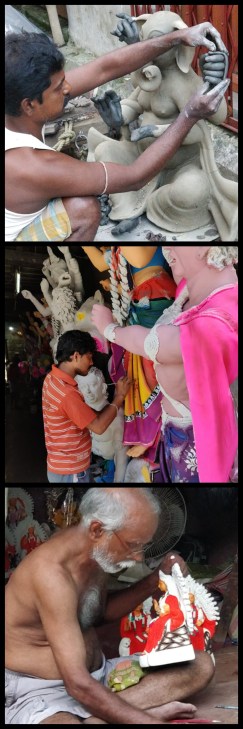
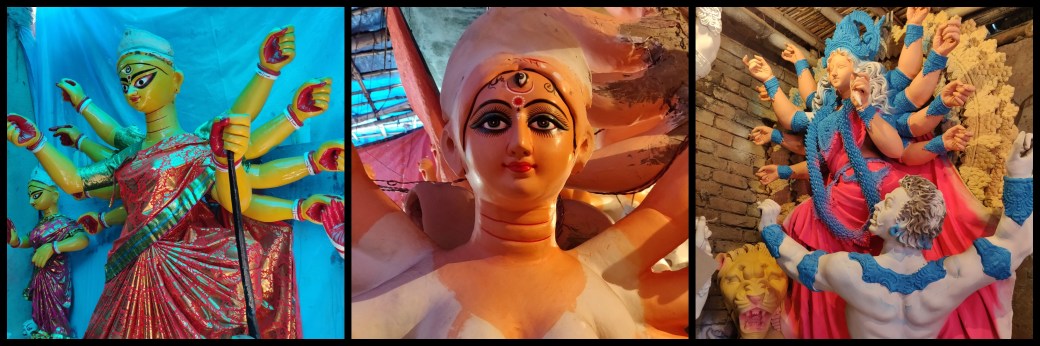
Their hands give shape to Durga Protima ( the idol) and soon mere clay becomes Goddess. In the green rooms of the theater the make up artists dress up men and women to play their part of make belief on stage. And in this green room of Kumortuli the Kumors were making the Gods ready to play their part on the stage called Pujo Mandap. The audience in both the theaters perhaps want the same, the escape from reality for a few hours or days, to look in amazement at the stage and believe in the unbelievable.
I stood transfixed in front of the men at work. Hours of bending painfully to give the Gods a human form, to get the perfect stroke of brush on each protima, to bring that hint of a smile on the Goddesses’ face, to fill with light and depth those soul searching eyes, it is a craft indeed and something more surreal. Who is the creator after all was a silent question that kept enveloping my mind as I walked through those lanes of Kumortuli.
The artisans of Kumortuli are simple, poor, seasonal wage earners. Their homes and studios (quite a fancy word for such work place) reflect the simplicity and poverty of its dwellers. The houses had not been painted in years, the electrical wires overhead were all tangled up but surprisingly did supply electricity. I thought to myself that true genius thus resides in this maze of lanes and by lanes, hiding their poverty in the sheer brilliance of creativity. They are not celebrated everyday, but the yearly recognition of their craft, the coverage by news channels and print media gives them some borrowed time of celebrity status . Their hand to mouth existence does bring to mind some pertinent questions but nothing so strong that cannot get blinded by the dazzle of the flashbulbs! The constant stream of visitors, tourists and locals alike, capturing the images, colors, and work-in-progress moments brings a smile on their faces. Ask them once, and they willingly allow you to take pictures. After posing for the camera they get back to their work with undivided attention. I come back home filled with images both in my mind and in my camera. This year when I will stand in front of Ma Durga with folded hands and chant ” Rupam Dehi, Jasho Dehi ” my mind will certainly pause and think of the Kumors of Kumortuli.
 sangeeta chakladar
Beautiful write and I can understand how you feel about leaving Kolkata amidst Pujo preparations! Thank you for this tour of Kumortuli. Every time I look at maa’s protima, I will think of the kumors.
LikeLiked by 1 person
Yes Poonam, the trip to Kumortuli was a very memorable one. Thanks.
LikeLike
Beautifully written Sangeeta! Felt like I am in Kolkata, though I haven’t been there yet.Never knew about Kumors or kumortuli. Thanks for the great information well narrated through your blog.
LikeLiked by 1 person
Thanks Surekha. I went there for the first time..now…and felt compelled to tell their story. Glad you liked .
LikeLike